

Healing together,
from the first hours of life.
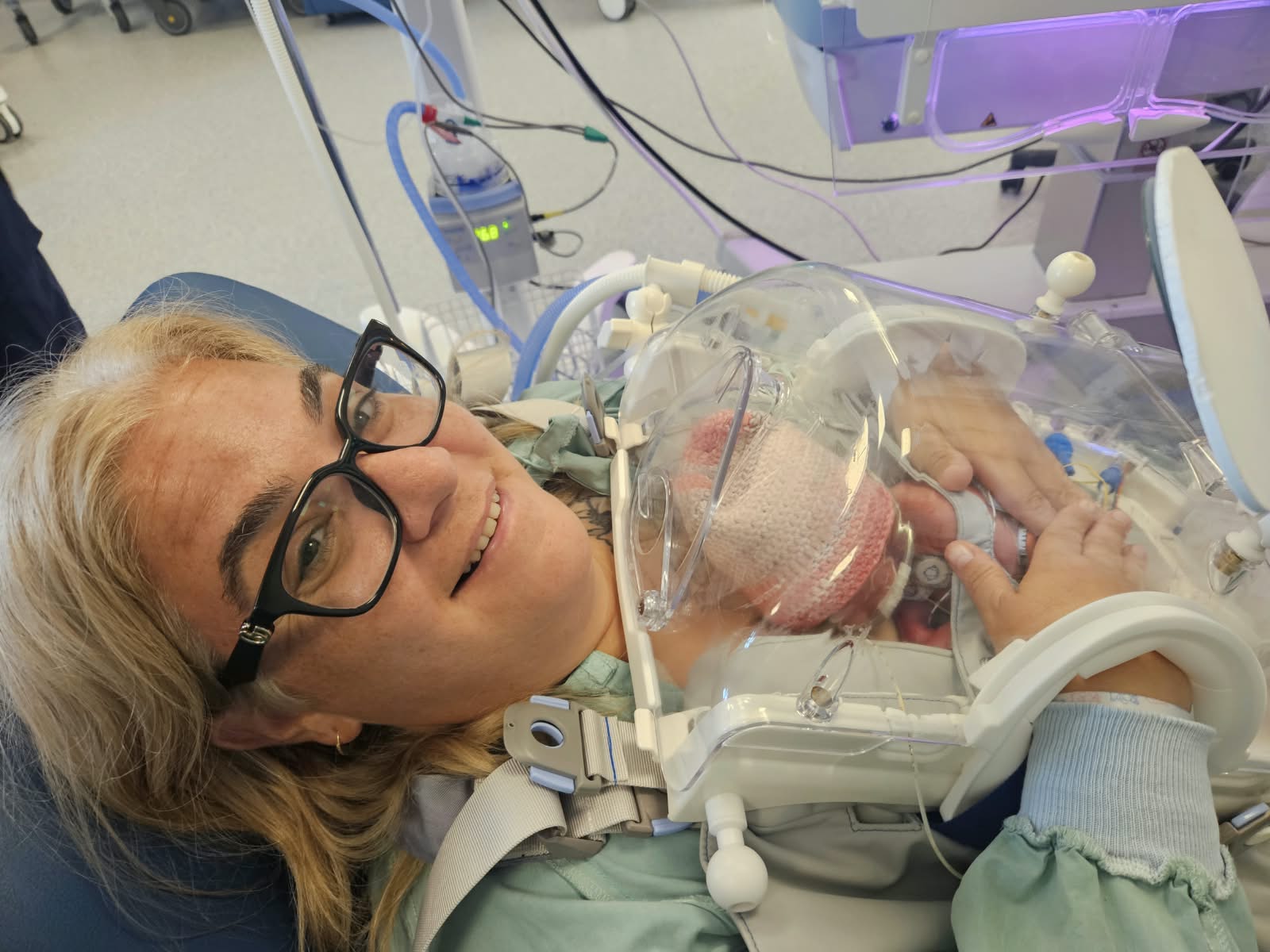
Skin-to-skin care supports your baby’s development and your own recovery. Skincubator is designed to make it possible to hold your baby for hours at a time.
What the research shows
For babies born before 32 weeks, skin-to-skin contact starting soon after birth and lasting several hours a day is associated with real benefits, for your baby and for you.
We know it isn’t easy.
You have just been through a sudden, difficult, or even traumatic birth, and you’re likely still recovering yourself. Your baby may be very small, on breathing support, or connected to tubes and lines. It can be a lot to navigate.
In many NICUs, that means skin-to-skin care, though recommended, starts later or lasts for shorter periods than the research suggests. That’s because holding a baby this fragile, safely and for a long time, has been hard to do.
Skincubator was designed to help change that, so you can hold your baby for longer.
Holding your baby,
with the support you both need.
Skincubator is a wearable medical device, designed with NICU nurses and families, that supports your baby on your chest, even when they’re very small or have tubes and lines.
A role that’s yours.
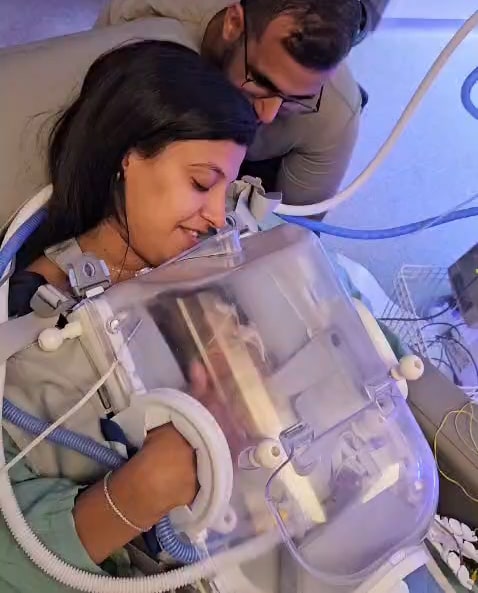
As a partner, you may feel pulled in every direction: supporting the mother, worrying about the baby, and keeping things going at home. It can be hard to know where you’re needed most.
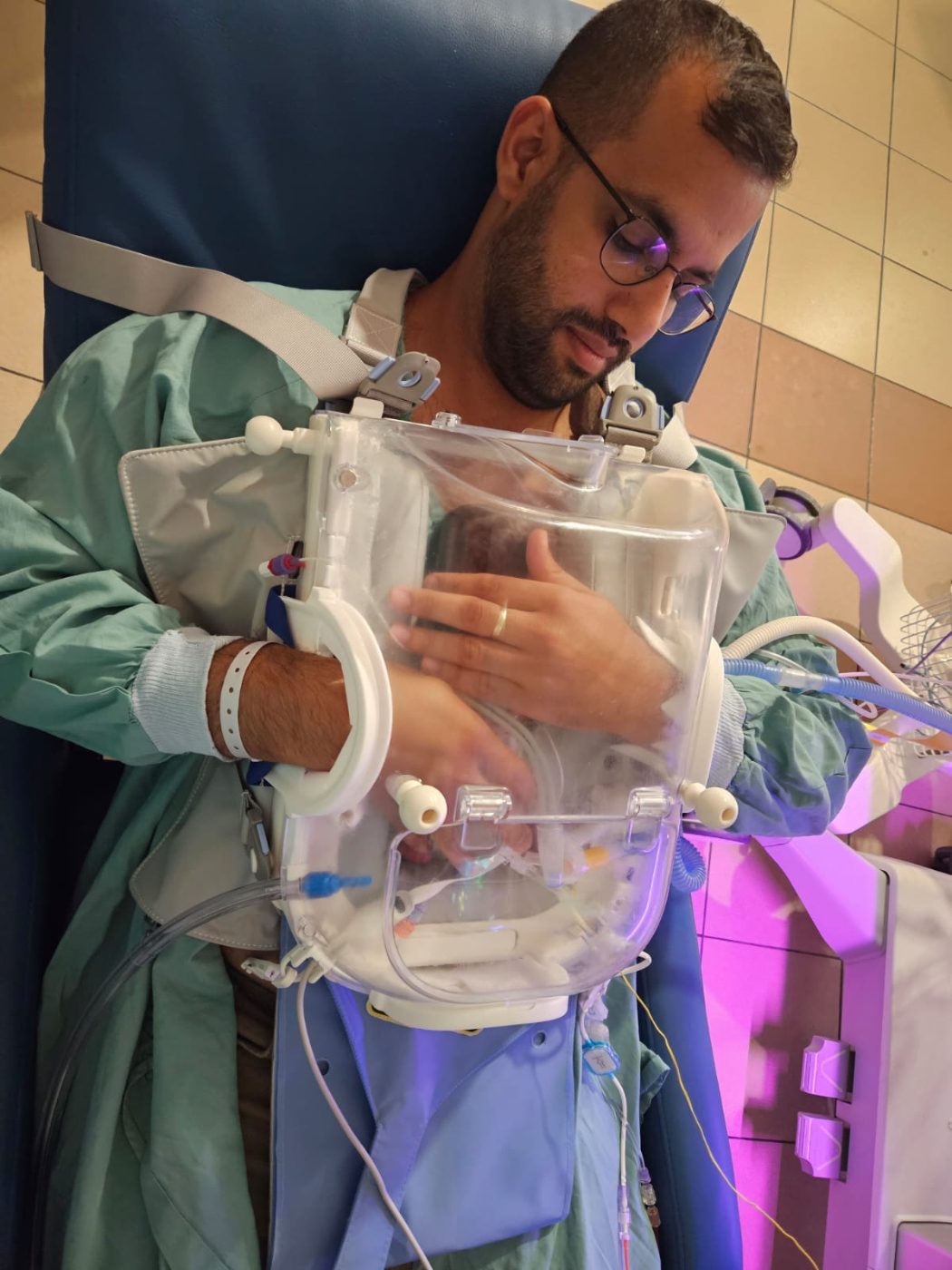
Skin-to-skin care gives partners a way to care for and protect your baby directly. With Skincubator, you can hold your baby for hours while the mother rests.
Sharing the hours.
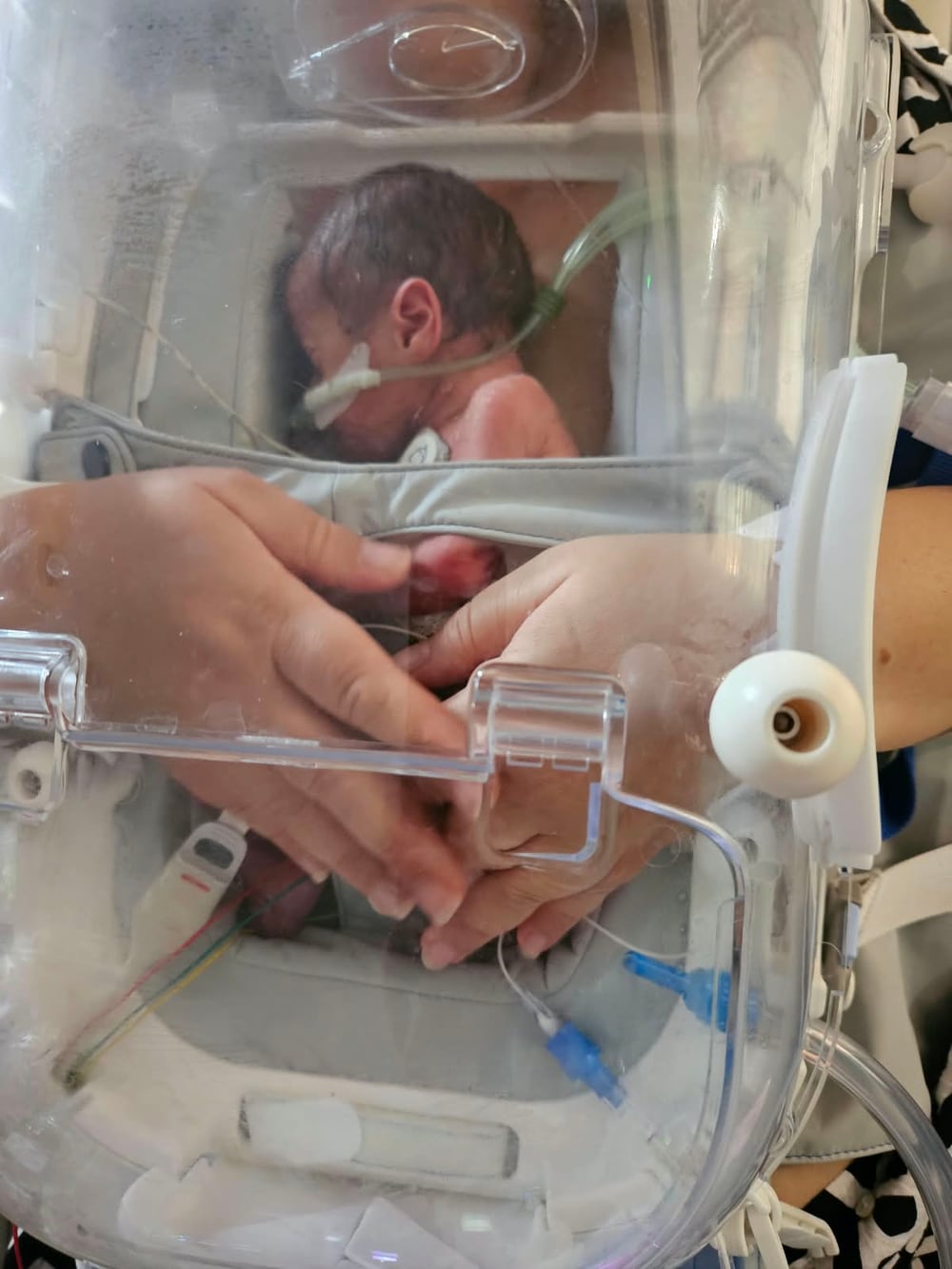
Grandparents and other relatives play a big part in a family’s NICU journey. Many families hope the mother will be the first to hold the baby, a wish that deserves respect. But while she’s recovering, it isn’t always possible.
With the parents’ and care team’s blessing, family members can share in skin-to-skin care, so the baby stays close and the parents can rest.
Family stories
“It gave me a meditative way to step back into pregnancy, to allow a more gradual, less traumatic separation.”
“With Skincubator I could focus on being with my son, instead of sitting still.”
Questions families ask
When can I start holding my baby?
Skincubator was designed to make skin-to-skin possible from the first hours of life, even for babies on breathing support or with tubes and lines. Your care team will decide when your baby is ready.
Is it safe for my baby?
Your baby lies on your chest, supported by the device rather than your arms. Breathing tubes and lines are anchored so they don’t pull; warmth and humidity are maintained; and the clear cover lets your care team see and reach your baby at any time.
Skincubator is registered in Australia and New Zealand. In the United States it is an investigational device, used in approved research studies. Your care team can tell you how it is used in your unit.
What does a session look like?
A nurse gently moves your baby onto your chest using the transfer pad. Once your baby is settled, you can stay together for hours, while the team continues routine care.
I’m recovering from birth myself. Can I still do this?
Yes. Skincubator is designed for comfort, so you can hold your baby while resting, lying back, or even sleeping. Skin-to-skin care supports your own recovery too.
Can I pump or breastfeed during a session?
Yes. Pumping can continue while you hold your baby.
What if I need a break?
Your partner or family member can take over, so your baby stays close while you rest, eat, or step away.
What if my baby needs care during a session?
Many routine checks and procedures can continue through the device’s access ports. If your baby needs to come out quickly, the cover releases in one movement.
Is Skincubator available in my NICU?
It’s in use at a growing number of NICUs. If yours doesn’t have it yet, ask your care team about it, or get in touch and we’ll help you start the conversation.
Talk to your care team
If you’d like to explore skin-to-skin care with Skincubator, ask your care team, or get in touch and we’ll help you start the conversation.
References +
1. World Health Organization. Recommendations for care of the preterm or low-birth-weight infant, 2022.
2. Travis KE, Lazarus MF, Scala M, et al. Skin-to-skin holding in relation to white matter microstructure in infants born preterm. Neurology, 2025;105(8):e214138. Stanford, 86 infants under 32 weeks: an average of 24 minutes of skin-to-skin a day. doi.org/10.1212/WNL.0000000000214138
3. Inpatient skin-to-skin care predicts 12-month neurodevelopmental outcomes in very preterm infants. The Journal of Pediatrics, 2024. Stanford, level IV NICU: families averaged about 17 minutes a day. PMC11514444
4. Narciso LM, Beleza LO, Imoto AM. The effectiveness of Kangaroo Mother Care in hospitalization period of preterm and low birth weight infants: systematic review and meta-analysis. Jornal de Pediatria, 2022;98(2):117–125. Twelve randomized trials: hospital stay 1.75 days shorter on average. doi.org/10.1016/j.jped.2021.06.004