Skincubator Neocare Prolonged skin-to-skin care from day one

Built with NICU teams and families, for NICU teams and families.

Skincubator is a wearable device for babies under 2000 g, including under 1000 g, on respiratory support (CPAP, non-invasive or invasively ventilated), with arterial, umbilical, feeding and airway lines in place, from the day of birth while still unstable.

It carries the incubator’s conditions onto a parent’s chest, and holds them there for as long as the session runs.

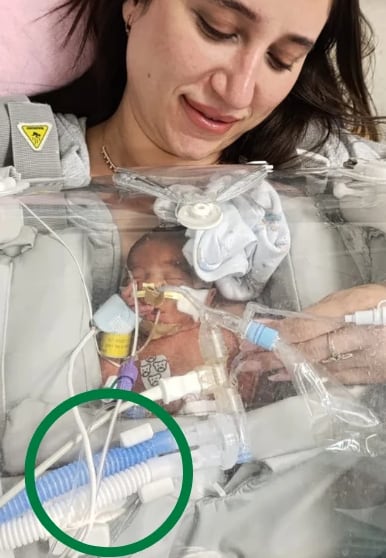
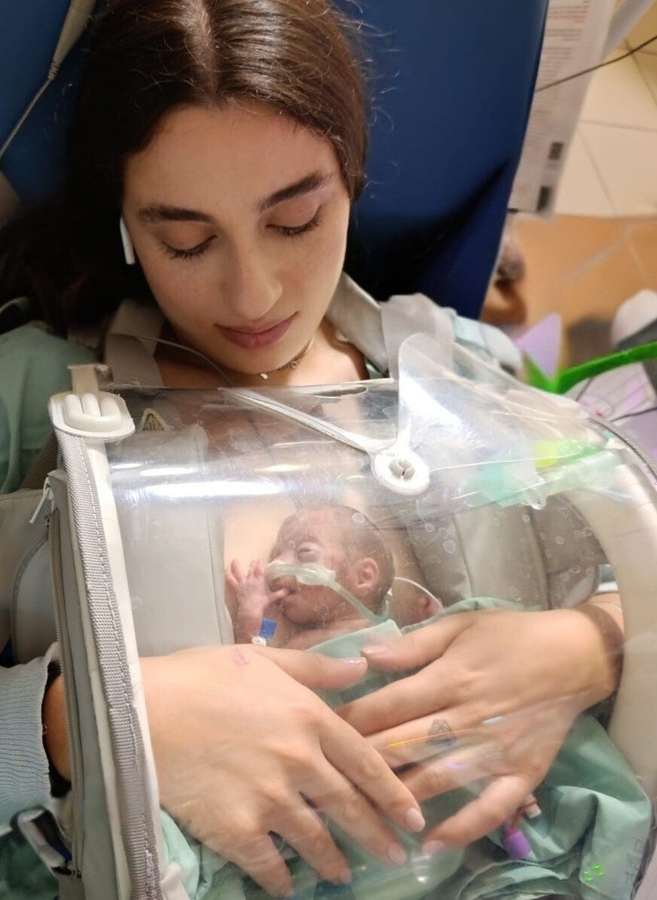
An infant born at 24 weeks, on his mother in prolonged skin-to-skin care in the Skincubator

A 24-week-old infant, 580 g, on his mother in prolonged skin-to-skin care, supported by Skincubator. Picture taken after 6 hours of the intervention, done in two sessions.

Four combined wearable and behavioural subsystems, solving six critical tasks at once.

Everything here runs on the parent’s own body heat, so it works anywhere in the unit.

01  Retractable transfer pad

One nurse. Under three minutes.

Solves 01 · Move the baby

Moves beneath the baby without friction to fragile skin. Move the baby in any position, with all lines and tubes secured, in a warm and humid environment. Once in position it becomes a rigid, load-bearing platform.

A standard transfer of a ventilated baby can take up to three staff and over five minutes.

One nurse, under three minutes, with minimal handling, line safety and no cold stress.
02  Environmental control

The warm, humid air a preterm baby needs travels with the baby.

Solves 03 · Warmth and humidity04 · Watch and reach

Preterm skin loses heat and water fast, and the incubator is what holds that air still around it. The cover carries the same conditions onto the chest: the parent’s body is the heat source, infrared-reflective surfaces send radiant heat back toward the baby, hydrophobic materials cut evaporative loss, and where humidified respiratory support is already running its moisture stays inside.

It is clear the whole way round, so the team watches the baby, the lines and the monitoring for the length of the session, and integrated access ports let routine care and selected procedures continue through the session.

Holds 70–90% humidity and 29–31 °C on a parent’s chest, for hours.

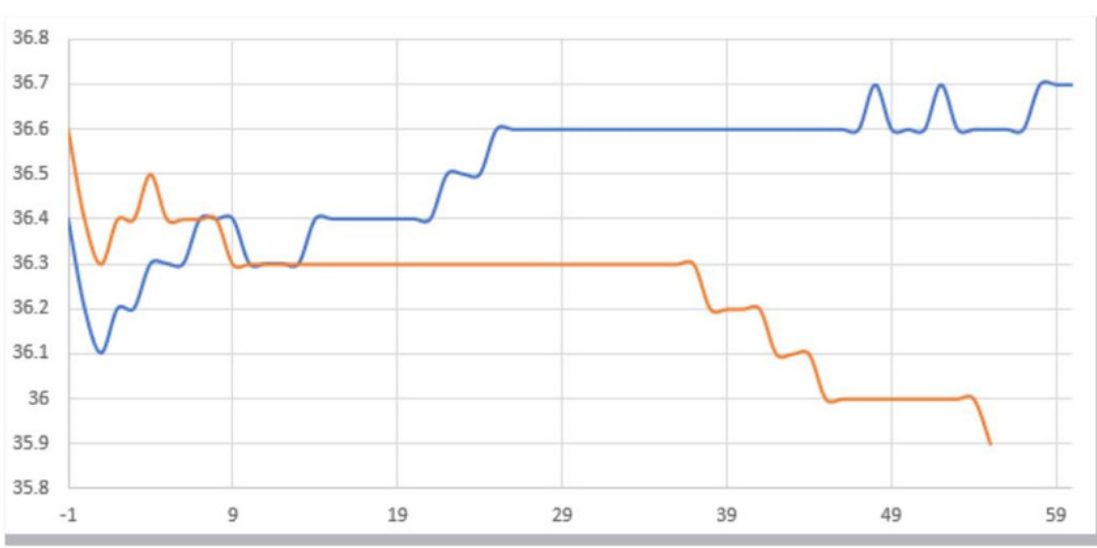
Core temperature over session minutes: skin-to-skin with Skincubator held near 36.6 to 36.7 degrees, traditional skin-to-skin care falling to 35.9
Skin-to-skin with Skincubator Traditional skin-to-skin care Core temperature (°C) over session minutes, internal measurement. A 620 g infant at 26 weeks GA, across two sessions.
03  Dynamic anchoring

The frame takes the load.

Solves 02 · Lines in place

Endotracheal tube, umbilical catheters, vascular lines, the respiratory circuit and monitoring probes all anchor to the structural frame. The modules give controlled slack, so a parent can shift, stand or be repositioned while mechanical load stays off the baby.

Anchors are repositionable, and the quick-release interfaces open in one movement when the baby has to come out fast.

The positioning nest supports fetal flexion and holds the baby against rotation and drift, prone, supine or side-lying.

ET tube and umbilical lines anchored with 5–10 mm of controlled slack.

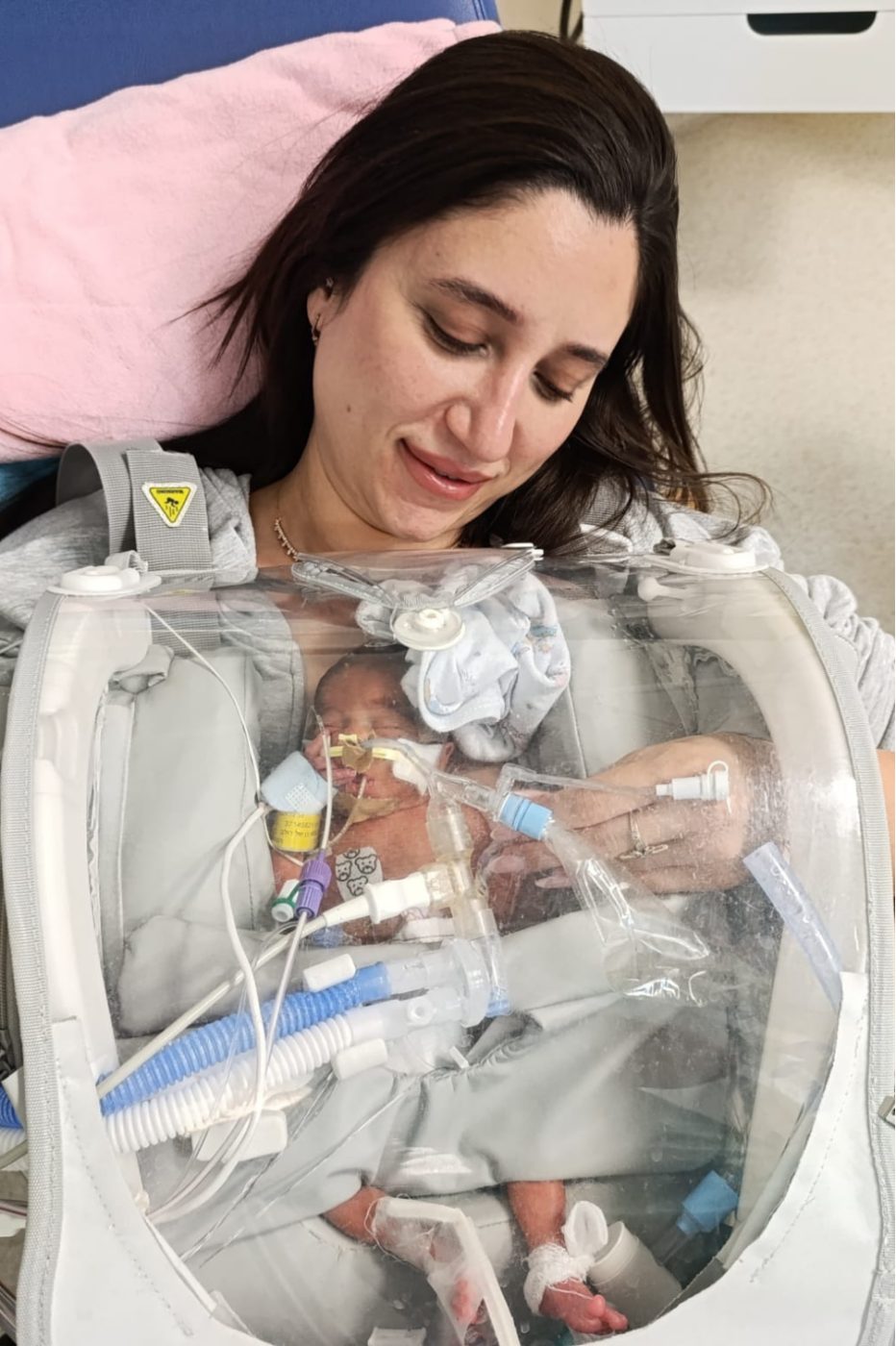
A mother holding her ventilated baby in the Skincubator, the breathing circuit and lines anchored to the device
Anchored to the device. Lines travel with the baby during transfer.
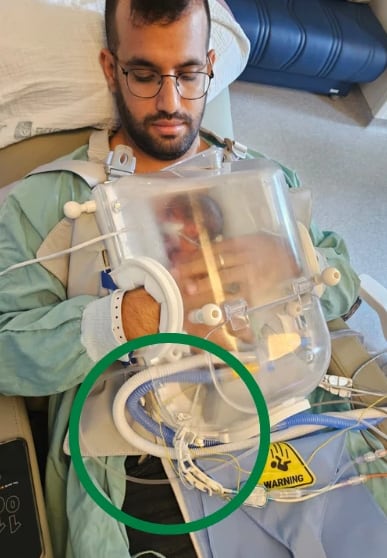
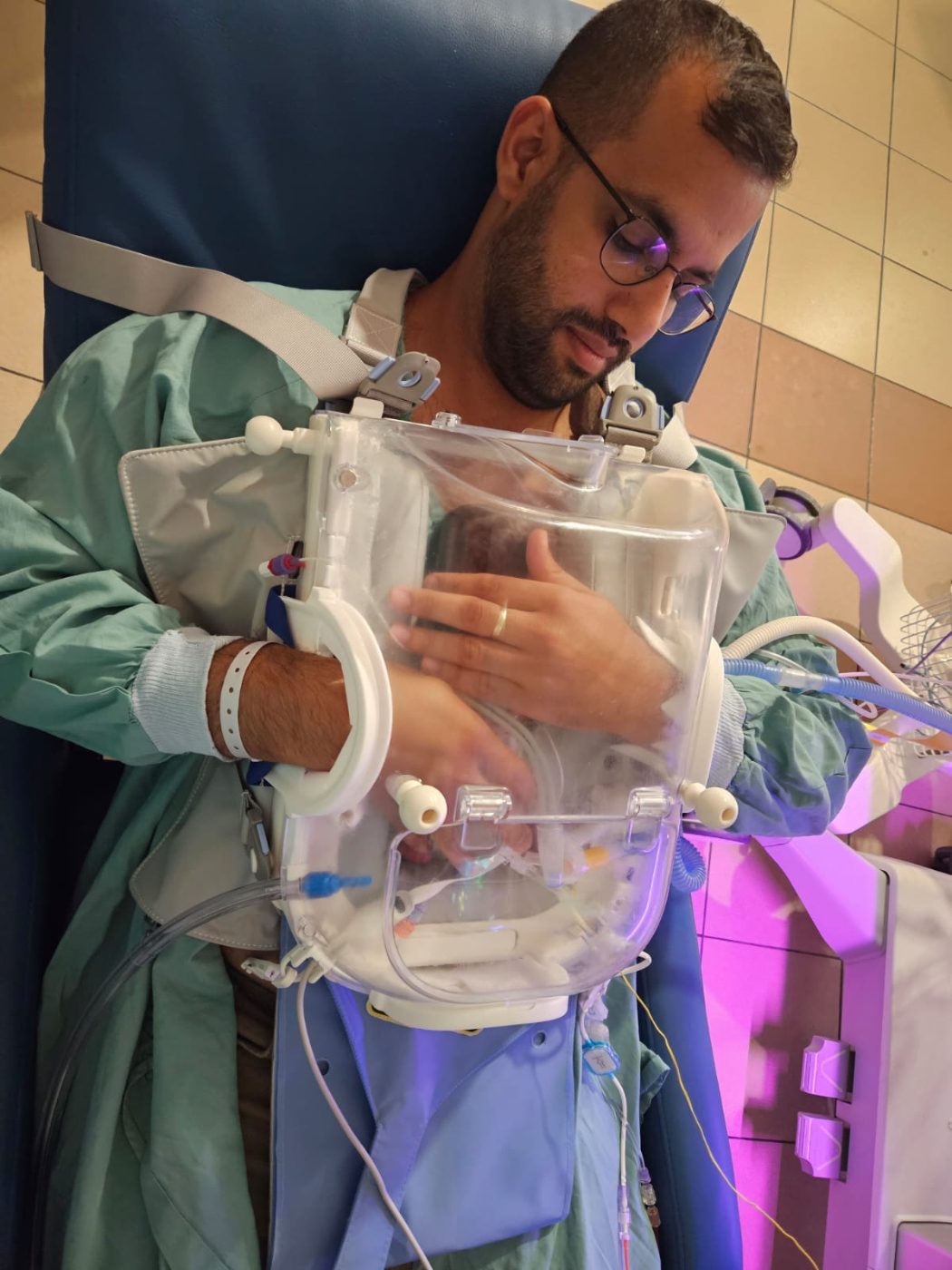
A father reclining with his baby held in the Skincubator, the respiratory circuit routed through the frame
Dynamic positioning. Prone, supine or side-lying, as the baby needs.
04  Parent engagement programme

Antenatally, then at the bedside.

Solves 06 · Prepare the parent

In their language, on their schedule. Trauma-informed, in both digital and print.

05  Sustain eight hours

By combining a set of engineering and behavioral solutions, we enable families and NICUs to achieve prolonged skin-to-skin care systematically: repeatedly, predictably, and at scale.

Questions about safety, hygiene or workload? Read the FAQ
Safety first

The cover comes off immediately.

If a baby has to come out, the quick-release interfaces open in one movement and the cover is clear of the baby at once.

Lines and tubes anchor to the device, so reaching the baby takes one hand. The baby stays supported throughout, and the organized routing is what makes a fast return to the incubator possible.

Materials

Biocompatible materials.

The materials in contact with the baby are in common use in medical devices, and have been tested for biocompatibility under Skincubator’s conditions of use.

Read the peer-reviewed papers

What 50 babies and their parents showed us.

All under 2 kg, on respiratory support, with lines in place, from the day of birth. The babies who currently go without.

6–15h

held in a day

Reached consistently by parents and babies.

Stable

temperature and humidity, throughout the session

On average, across sessions, in the thermoregulation study.

Zero

device-related adverse events

Across every session recorded to date.

From the program

Babies on respiratory support, with lines in place, held on a parent’s chest from the first days of life.

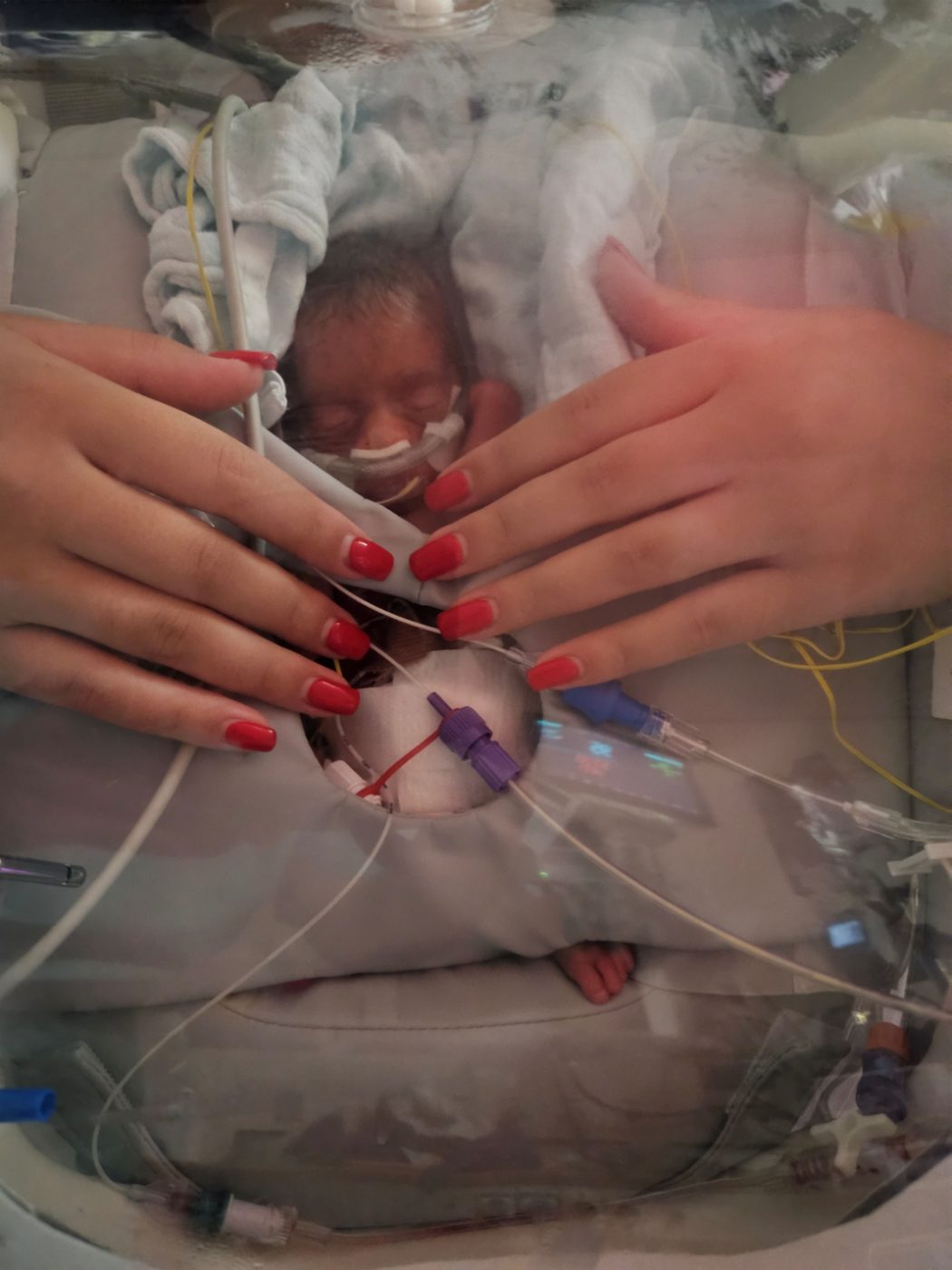
Both parents' hands on their baby through the access ports, with umbilical lines and monitoring in place
Umbilical lines

Held with umbilical arterial and venous catheters in place.

An infant of 765 g at 29 weeks, on day two, spent over five hours in one session with both catheters in place, and changed parents mid-session. The catheters anchor to the frame and travel with the baby, so the routing holds while the baby is carried, supine where the lines require it.

A mother holding her intubated baby in the Skincubator, the endotracheal tube and circuit anchored to the frame
Intubated

Held while intubated.

An infant born at 25 weeks, intubated, was held for six hours a day in the first days of life. The endotracheal tube and circuit anchor to the frame and move with the baby.

More from the program · swipe

A father resting with his baby held against his chest in the Skincubator
Rest

Parents asleep, holding.

The frame carries the weight, anchors the baby and the lines, and leaves the baby visible in full. A mother slept through much of a night with her baby on her chest. A father came each morning and stayed for hours, sleeping while staff cared for the baby on him.

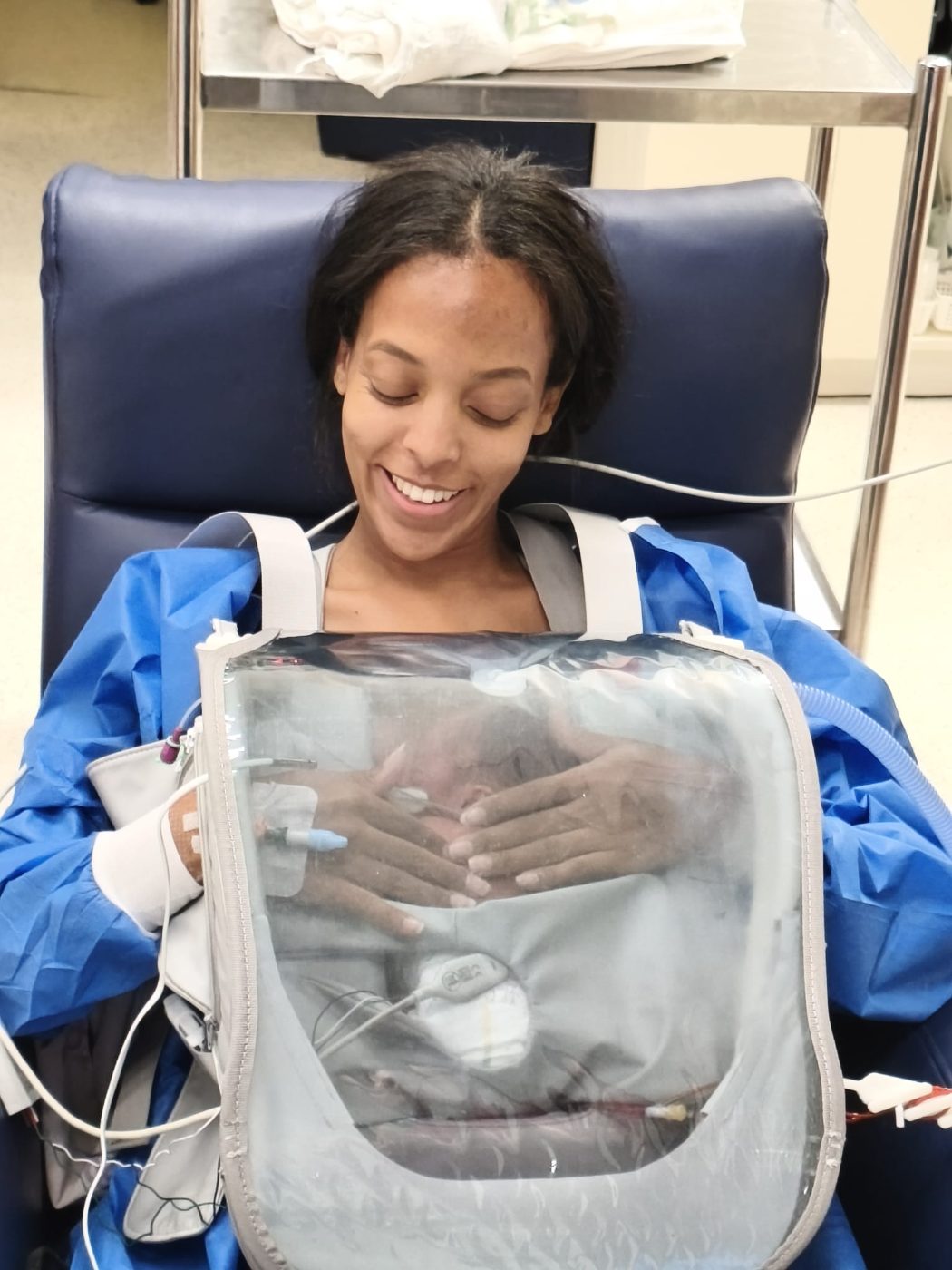
A mother smiling with both hands on her baby, held in the Skincubator through a long session
Duration

Six to fifteen hours in a day.

Families reach six to fifteen hours a day, in shifts, at or above what WHO recommends.

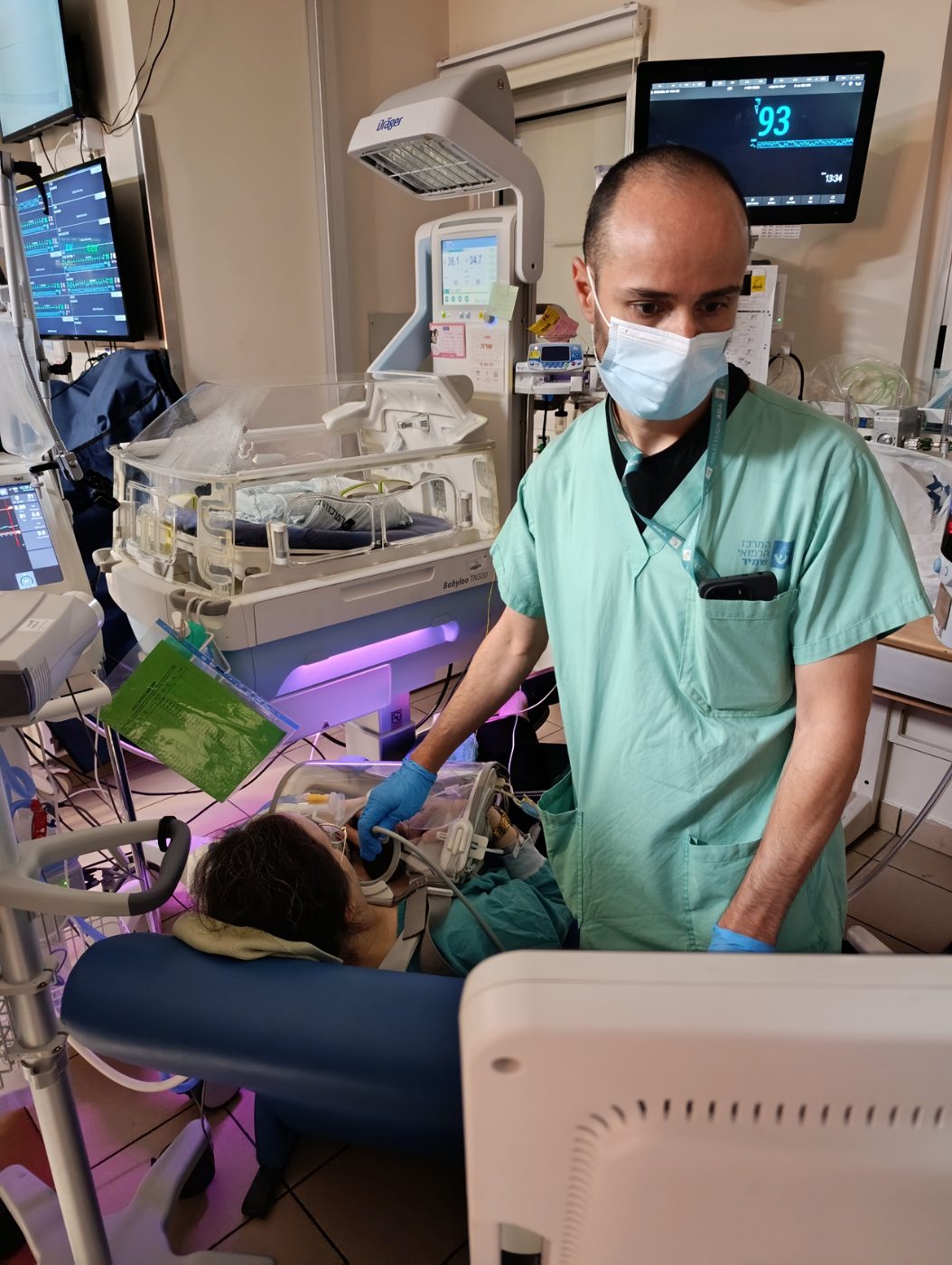
A clinician performing a procedure at the bedside while the baby stays held on a parent's chest
Care in place

Care continues through the session.

Nursing care ran through a six-hour session, and a functional echocardiogram was performed on an infant at 28 weeks, 1.3 kg, held by his father. Providers reach the baby through dedicated access ports.

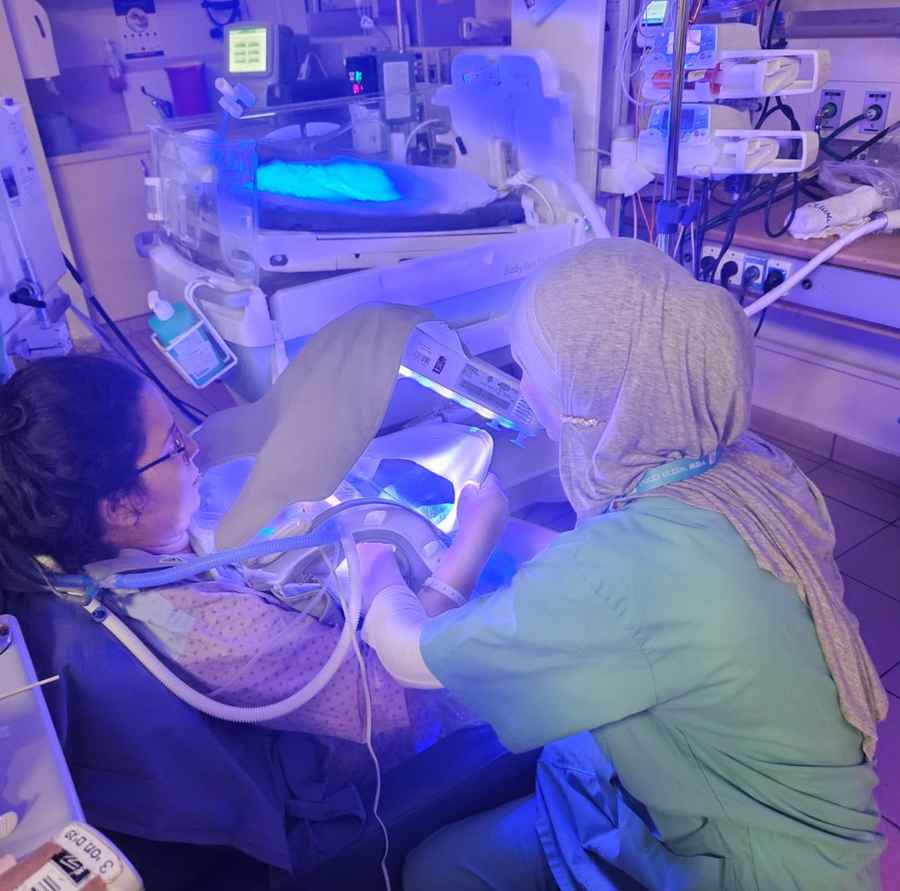
A nurse caring for a baby in prolonged skin-to-skin care during phototherapy Phototherapy

Phototherapy during full skin-to-skin care.

The transparent chamber transmits the light to the baby’s skin, and the darkening cover shields the parent’s eyes while a window keeps the baby in view.

What the studies found

Parents and nurses rated it safer and easier than traditional skin-to-skin.

Parents · 18 responsesSkincubatorTraditionalp
Skin-to-skin safety5 (5,5)3.5 (3,4)<0.001
Ability to sleep4 (4,5)1 (1,2)<0.001
Sustain 8–12 h a day4 (3,4)2 (1,3)0.01
Would recommend5 (4,5)3 (3,4)0.007
Convenience4 (4,5)3 (2,4)0.02
Transfer safety5 (4,5)4 (3,4)0.08
Interaction with baby4 (4,5)4.5 (4,5)0.05
Nurses · 20, MonashSkincubatorTraditionalp
Safety5 (5,5)4 (4,4.5)0.001
Handling5 (5,5)4 (4,5)0.04
Convenience5 (5,5)4 (3,4.5)0.003

“With Skincubator I could focus on being with my son, instead of sitting still.”

Mother of a 25-week infant, Jerusalem

Likert scale, median (25th, 75th centile). Nurses: manikin simulation, transfer of a 29-weeker. Journal of Neonatal Nursing, 2025.

Published

Three peer-reviewed publications, three countries.

Am J Perinatol 2025 · Shaare Zedek, Jerusalem

The Skincubator: A Novel Incubator for Skin-to-Skin Care of Premature Neonates, Enables SSC within a Humidified Environment and may Improve Thermoregulation during SSC

Nitzan, Kasirer, Mimouni, Kagan, Bin Nun, Weiss, White, Hammerman

American Journal of Perinatology, 2025

PMID 39889760
DOI 10.1055/a-2526-5094

Read the paper
J Neonatal Nursing 2025 · Monash Newborn, Melbourne

Assessing nurses’ perceptions of safety and convenience when using the Skincubator 2.0 in a manikin simulation

20 nurses in a simulation study. Safety, handling and convenience each rated significantly higher: p = 0.001, p = 0.04, p = 0.003.

Yeomans, Paton, Kuipers, Sehgal, Roberts, Zhou, Altimier, Nitzan

Journal of Neonatal Nursing, 2025

Volume 31, Issue 5, Article 101714
DOI 10.1016/j.jnn.2025.101714

Read the paper
Am J Perinatol 2026 · Multi-site

Device Performance and Parental Perception of the Skincubator 2.0, a Wearable Device to Support Prolonged Skin-to-Skin Care for Preterm Infants

18 parent responses. Reported infant sleep scored 4 against 1 (p < 0.001). Sessions of 8 to 12 hours scored 4 against 2 (p = 0.01).

Nitzan, Phillips, Morag, Kipnis, Shotten, Hammerman, Nissimov

American Journal of Perinatology, 2026

Volume 42
PMID 41850325
DOI 10.1055/a-2834-0694

Read the paper

Plus a perspective on surrogate skin-to-skin in the Journal of Perinatology, 2026, with co-authors at Beacon, Dresden, UCSF and Loma Linda.

Bring prolonged skin-to-skin care to your unit.

Clinicians, hospitals, investors and families: tell us who you are, and the right person on our team will get back to you.

Or write to info@skincubator-neocare.com