

Research
Everything we build is tested at the bedside and shared. Our research, our news, and what we’re learning along the way.
News
Press coverage, grants, registrations and publications.
Research in the field
Our own research: the babies and families in the programme, the published studies, and the trials under way.
What 50 babies and their parents showed us.
All under 2 kg, on respiratory support, with lines in place, from the day of birth. The babies who currently go without.
Babies on respiratory support, with lines in place, held on a parent’s chest from the first days of life.
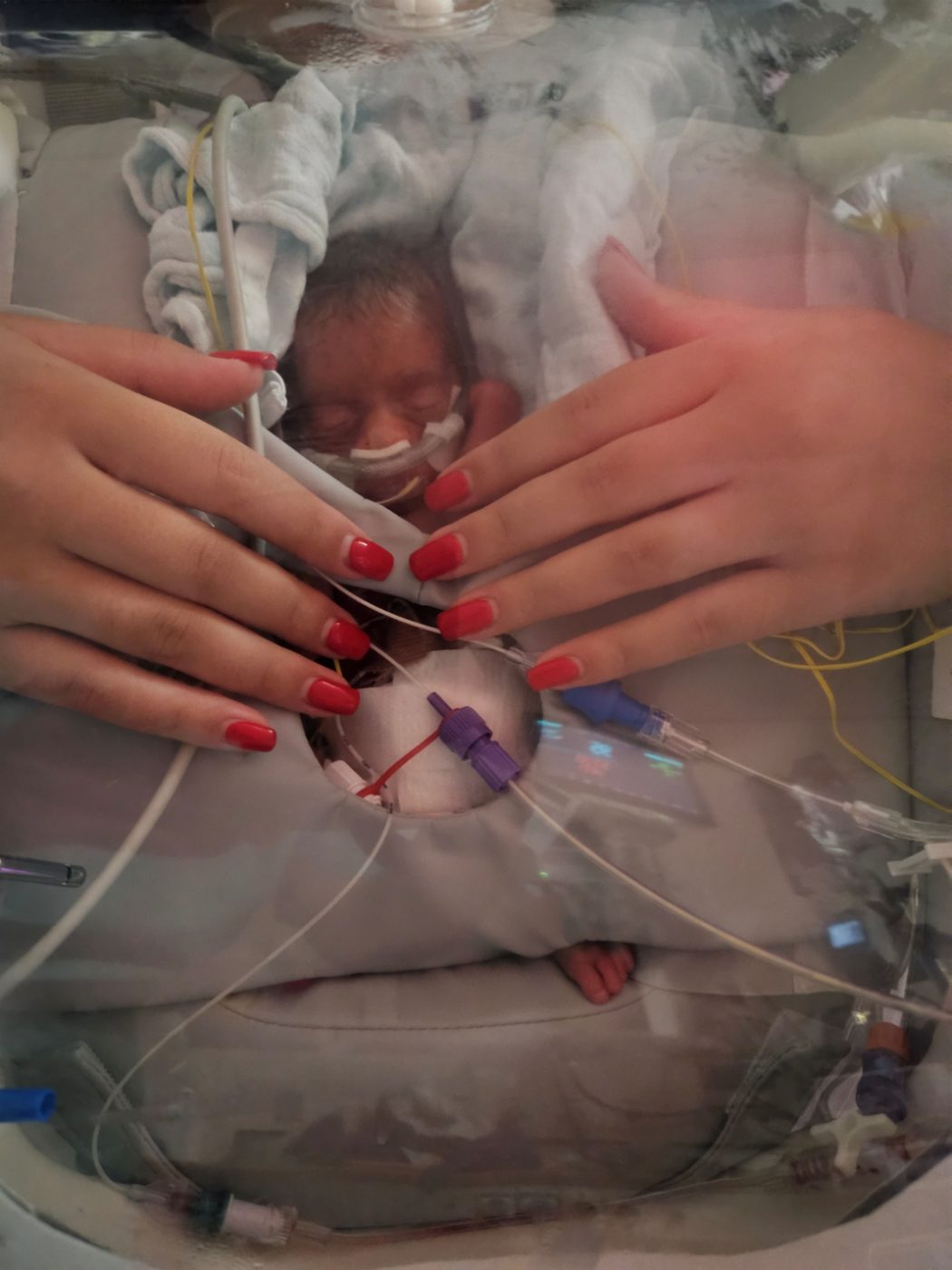
An infant of 765 g at 29 weeks, on day two, spent over five hours in one session with both catheters in place, and changed parents mid-session. The catheters anchor to the frame and travel with the baby, so the routing holds while the baby is carried, supine where the lines require it.
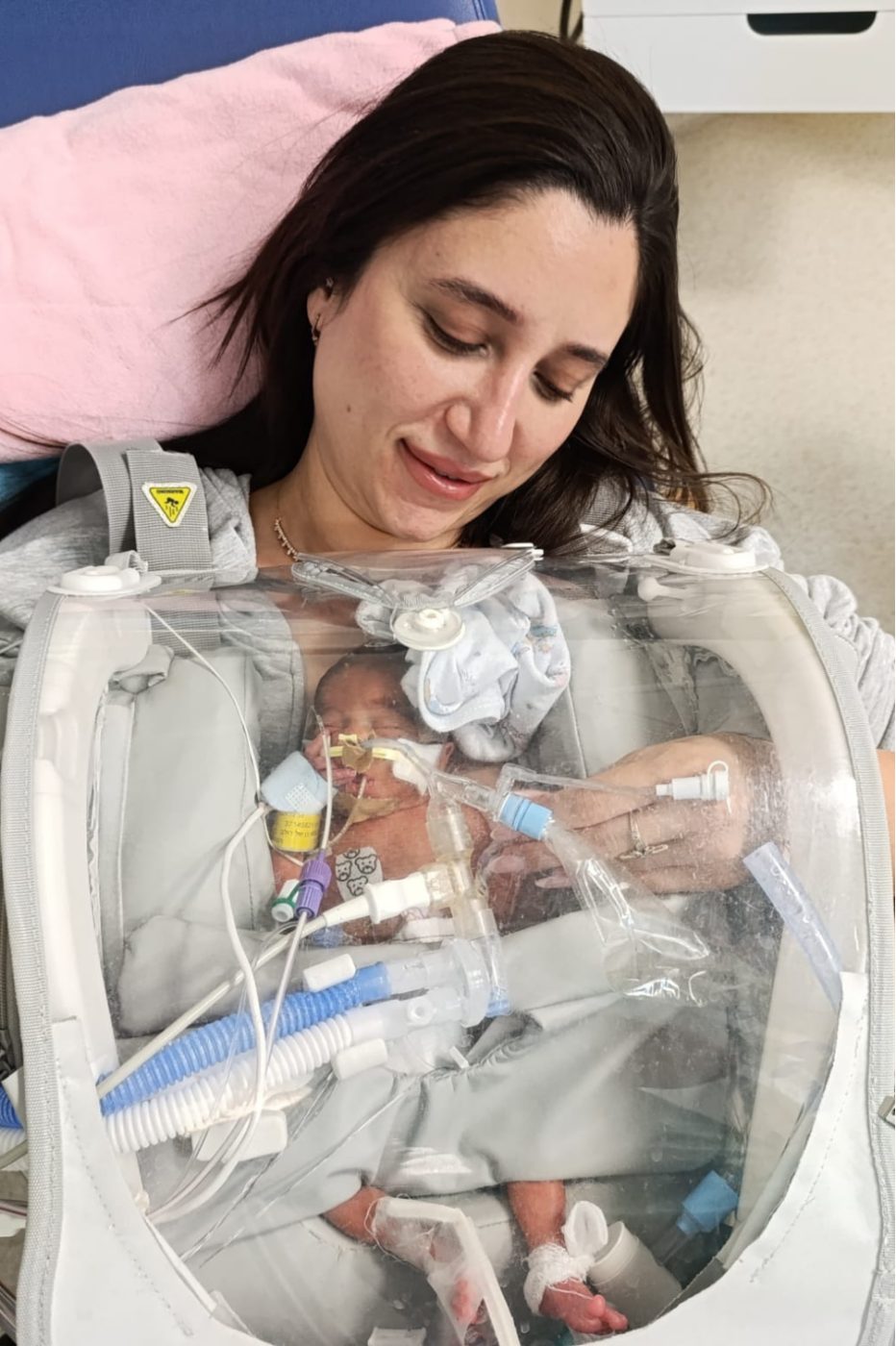
An infant born at 25 weeks, intubated, was held for six hours a day in the first days of life. The endotracheal tube and circuit anchor to the frame and move with the baby.
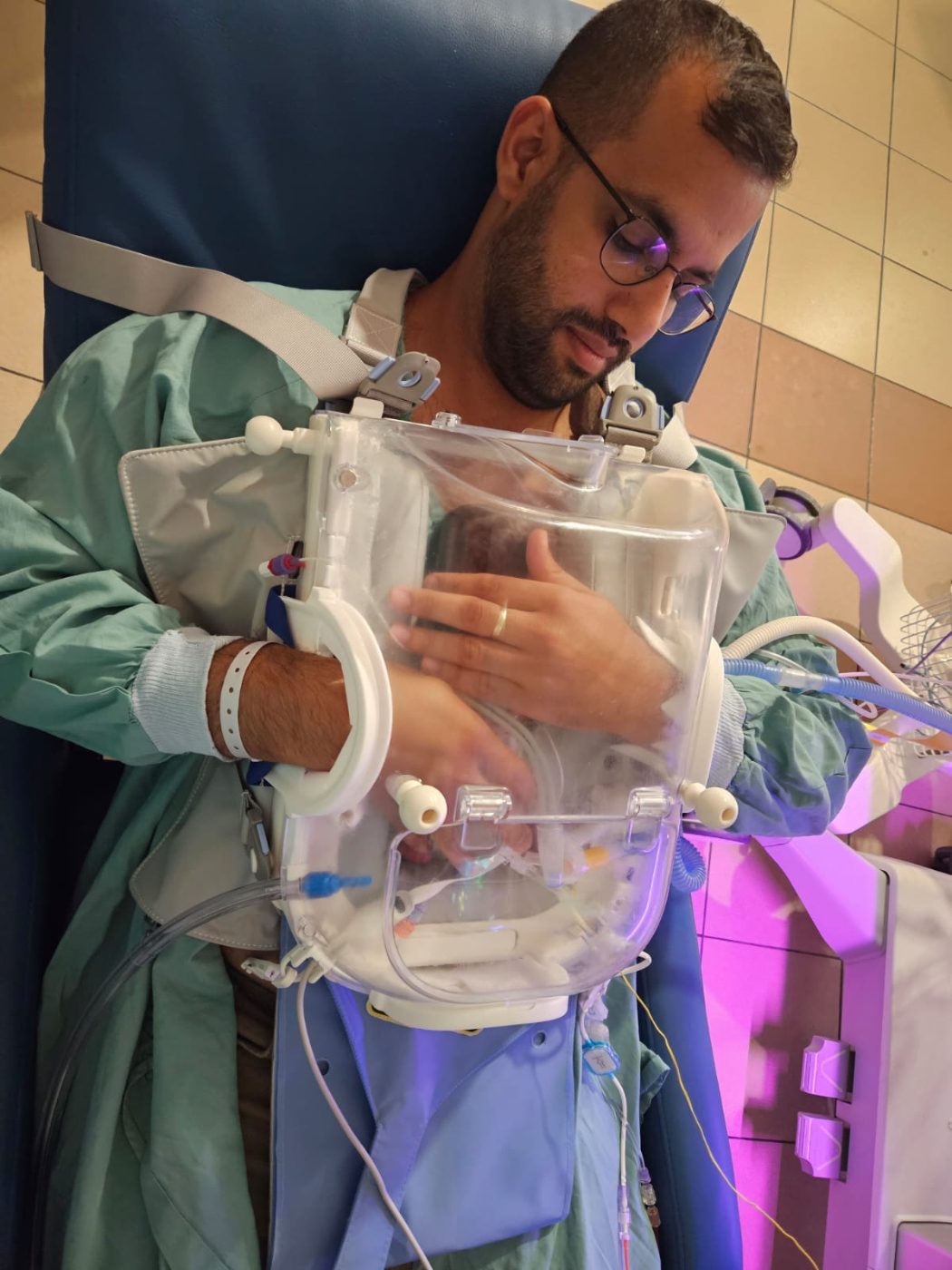
The frame carries the weight, anchors the baby and the lines, and leaves the baby visible in full. A mother slept through much of a night with her baby on her chest. A father came each morning and stayed for hours, sleeping while staff cared for the baby on him.
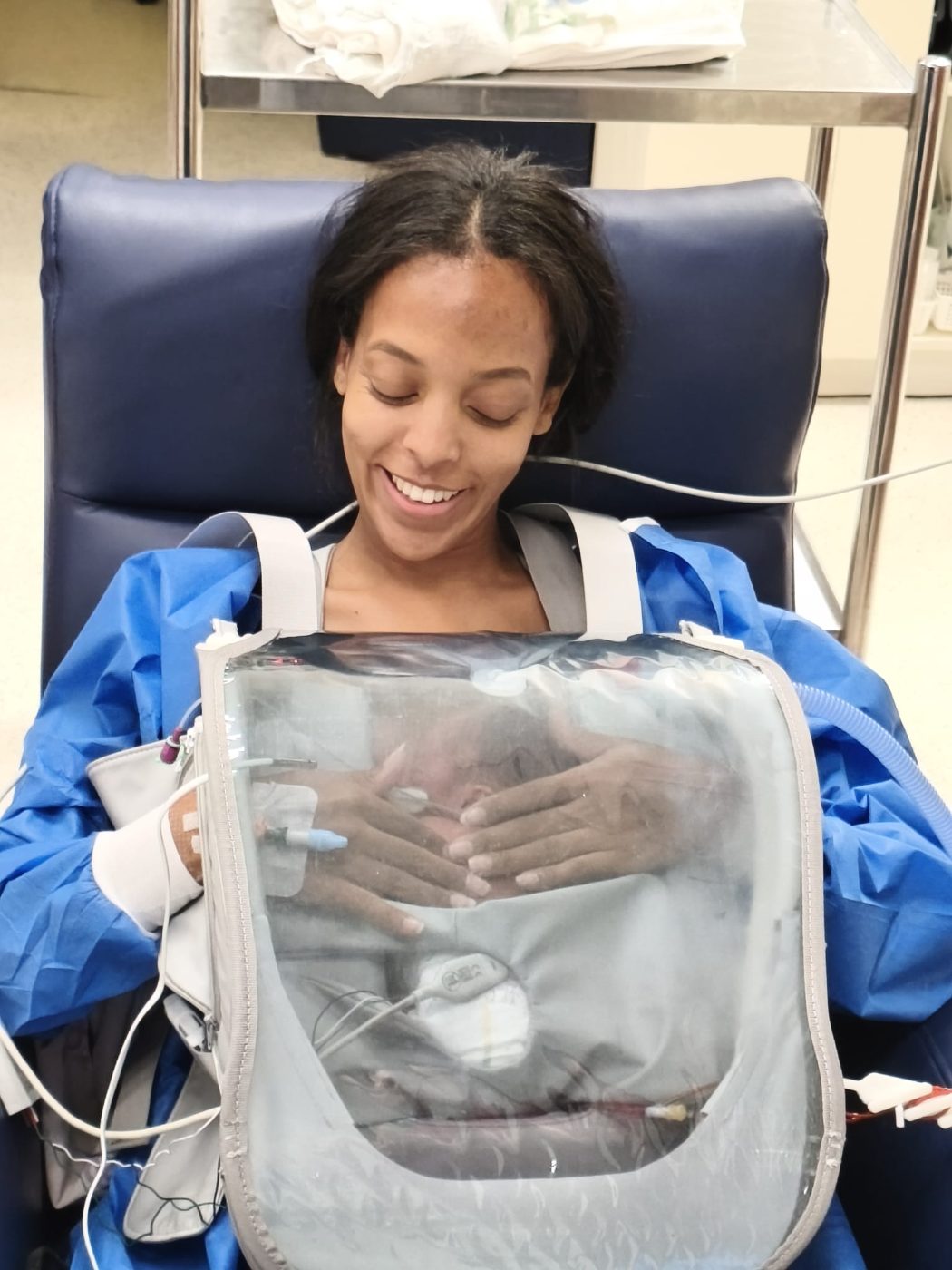
Families reach six to fifteen hours a day, in shifts, at or above what WHO recommends.
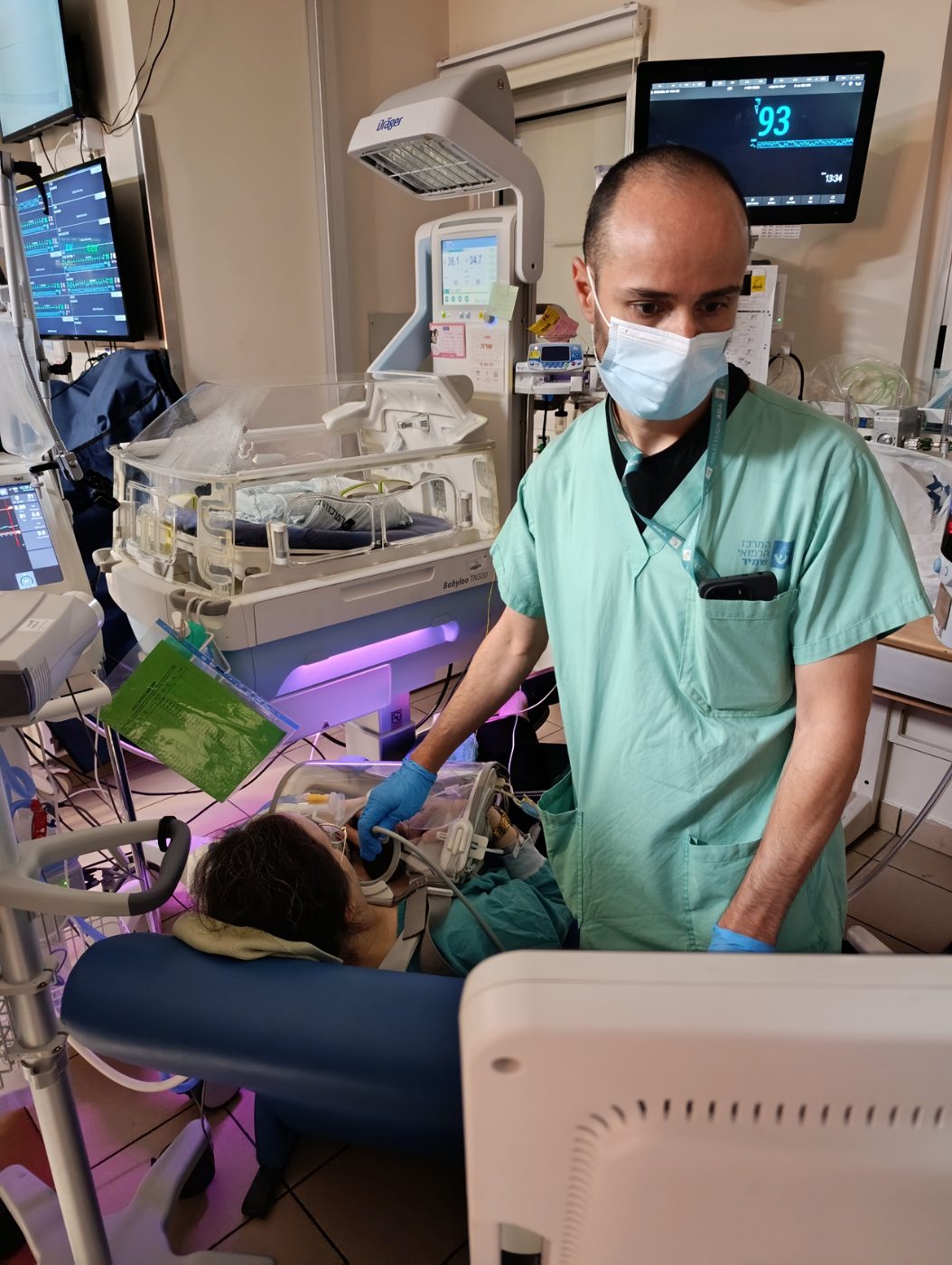
Nursing care ran through a six-hour session, and a functional echocardiogram was performed on an infant at 28 weeks, 1.3 kg, held by his father. Providers reach the baby through dedicated access ports.
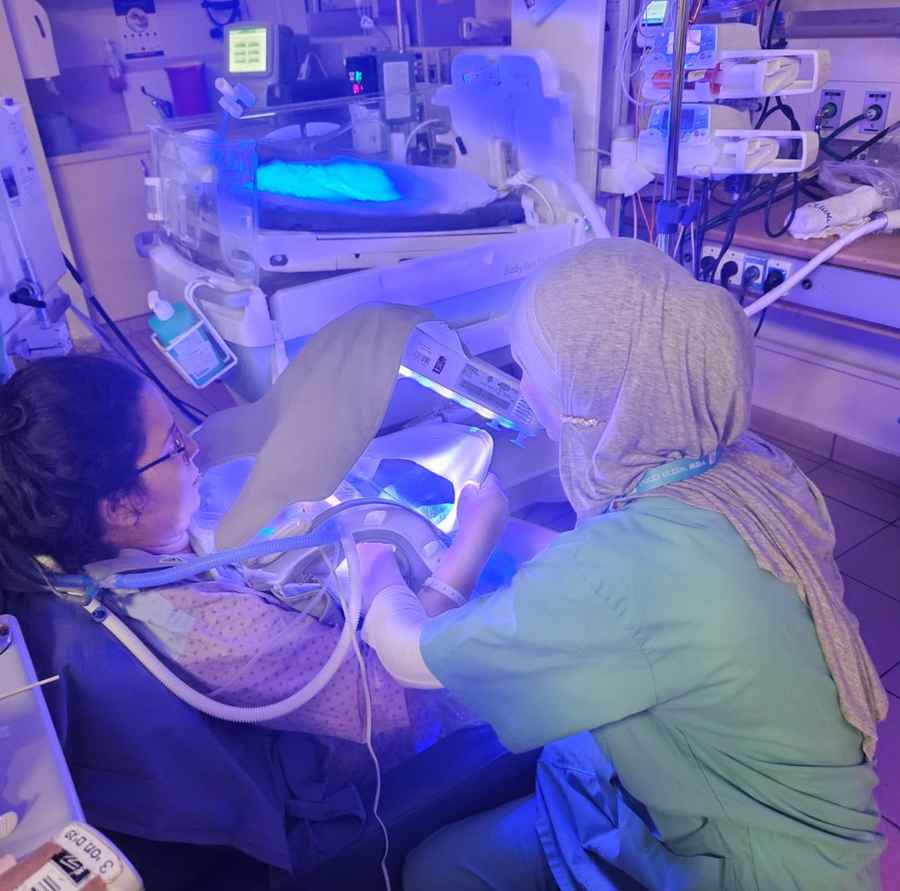
The transparent chamber transmits the light to the baby’s skin, and the darkening cover shields the parent’s eyes while a window keeps the baby in view.
How parents and nurses rated it.
“With Skincubator I could focus on being with my son, instead of sitting still.”
Likert scale, median (25th, 75th centile). Nurses: manikin simulation, transfer of a 29-weeker. Journal of Neonatal Nursing, 2025.
Three peer-reviewed publications, three countries.
Plus a perspective on surrogate skin-to-skin in the Journal of Perinatology, 2026, with co-authors at Beacon, Dresden, UCSF and Loma Linda.
News from the NICU, in your inbox.
New publications, study results and milestones. A few emails a year, no more.